Verdict
No. While coastal communities have understandable concerns, there is little evidence that offshore wind farms will impact beach and water activities.
Analysis
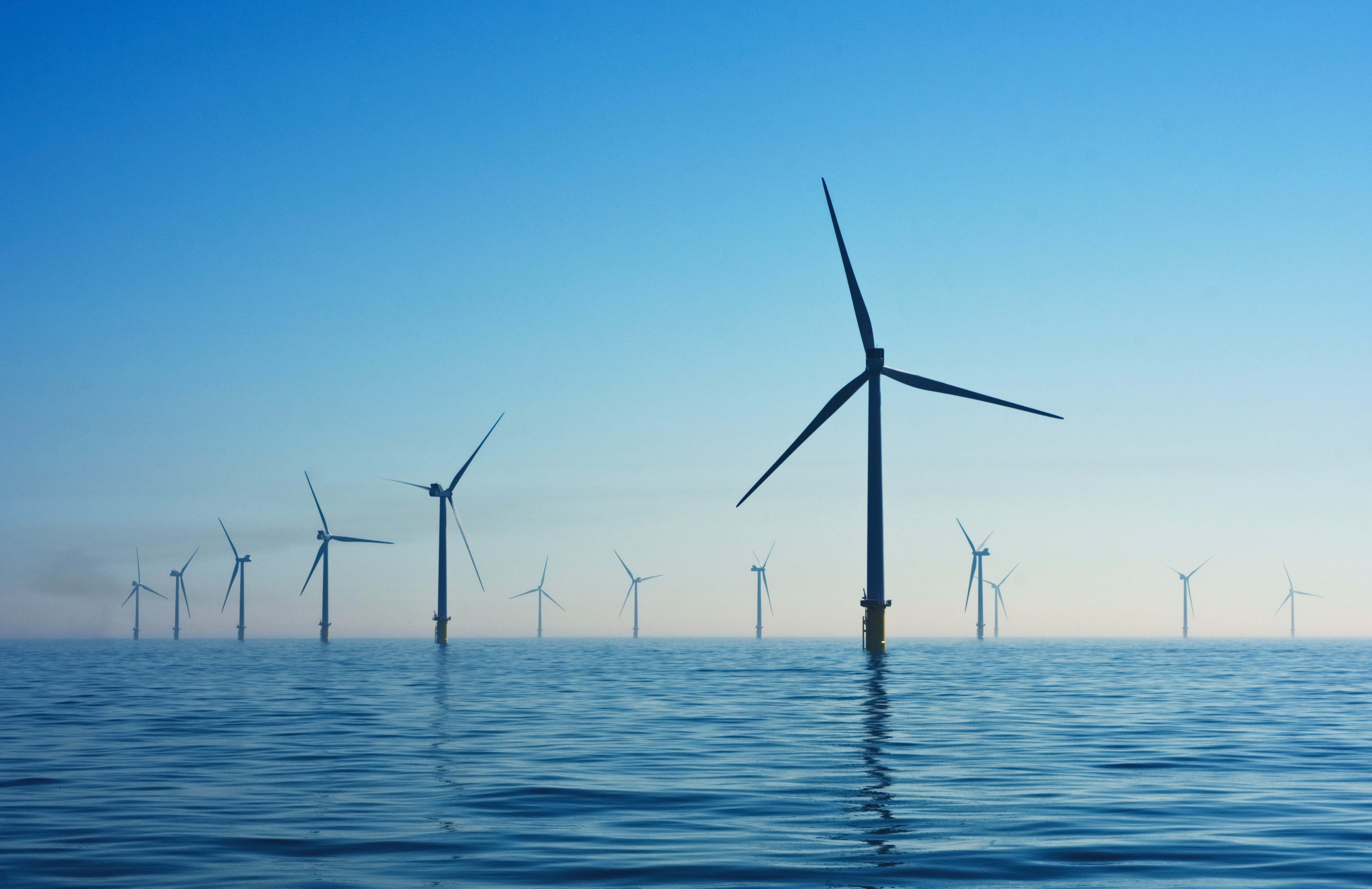
As Australia moves forward with its offshore wind energy plans, some coastal communities have raised concerns about the impact of offshore wind farms on beach use. Common questions include whether offshore wind turbines will be visible from shore, if they could disrupt tourism, or whether they might interfere with activities like surfing, swimming, and fishing.
Visibility from the shoreline
The visibility of offshore wind farms depends on how far they are from the coast. In Australia, the closest point to shore of the declared wind areas ranges from 10 to 30 km offshore1. At these distances, turbines may be visible in some conditions, particularly from elevated viewpoints along the coast or at night with lights on the horizon similar to a passing ship. The Victorian Government has released visualisations showing how offshore wind farms may appear at various distances. Given their distance from shore, they are unlikely to dominate the horizon or significantly alter the coastal landscape2.

Image: Victorian Government illustration of wind turbines 10km from Golden Beach, Victoria3.
Impact on beach tourism
International research shows offshore wind farms don’t harm tourism and can even boost it. While impacts vary by distance from shore, negative effects were noted only when turbines were about 5 km from the beach—closer than any proposed Australian projects.
International studies have found that offshore wind can attract “curiosity tourism,” where visitors can explore renewable energy sites4, 5. In some cases, AirBnB rentals increased after wind farms were built6.
Effects on watersports
For activities such as swimming, surfing, and other watersports, offshore wind farms are expected to have minimal impact.
Existing research suggests that the turbines will be located far enough offshore that they will not affect wind patterns or currents in nearshore areas, so will have no impact on ocean conditions that surfers and swimmers rely on7, 8.
Recreational and commercial fishing
Offshore wind farms share the ocean with coastal communities just like other industries like shipping or gas extraction9. International experience has shown that commercial and recreational fishing, and offshore wind farms can coexist10.
Offshore wind farm construction can temporarily affect marine ecosystems by disturbing sediment and producing noise11. However, once operational, wind farms can provide positive biodiversity effects by acting as artificial reefs attracting marine life. Research shows that fish populations are larger around wind turbines than surrounding areas12.
In practice, fishing may be impacted by the establishment of safety and exclusion zones during the construction and operation phases13.
Beach erosion
There are two schools of thought on beach erosion:
- Offshore wind farms reduce storm surge impacts during extreme weather events like cyclones or king tides, preventing beach erosion14, 15.
- Offshore windfarms have little to no impact on wave conditions and, therefore, do not influence coastal erosion16.
These differences are often due to local factors such as wave conditions, turbine size, and whether the turbines are floating or fixed to the seabed. Either way, no strong evidence suggests that offshore wind farms will degrade beaches or their quality.
Conclusion
Concerns about offshore wind farms affecting beach use are understandable, but the evidence suggests these impacts will be minimal.
Given the distance of proposed Australian projects from shore, they are unlikely to significantly affect visibility, tourism, watersports, or beach erosion. While deep-sea fishing activities may require some adjustments, international experience shows that they do not have a significantly negative effect.
As offshore wind energy becomes part of Australia’s renewable energy future, ongoing consultation with coastal communities and industries will be essential to balance different interests and ensure a smooth transition.
References
1 – Department of Climate Change, Energy, the Environment and Water (DCCEEW) (no date) Declared offshore wind zones. Australian Government. Available at: https://www.dcceew.gov.au/energy/renewable/offshore-wind/areas
2 – Energy Victoria (2025) Offshore wind turbine visualisations. State Government of Victoria. Available at: https://www.energy.vic.gov.au/renewable-energy/offshore-wind-energy/wind-turbine-visualisations
3 – Energy Victoria (2025) Offshore wind turbine visualisations. State Government of Victoria. Available at: https://www.energy.vic.gov.au/renewable-energy/offshore-wind-energy/wind-turbine-visualisations
4 – Bishop, I.D. (2020) Visualisation of renewable energy developments: Understanding public preferences for wind energy in Australia. Energy Policy, 147, 111885. Available at: https://www.sciencedirect.com/science/article/abs/pii/S030142152030389X
5 – Carr-Harris A and Lang C (2019) ‘Sustainability and tourism: the effect of the United States’ first offshore wind farm on the vacation rental market’ Resource and Energy Economics 57:51-67. https://doi.org/10.1016/j.reseneeco.2019.04.003
6 – Bloomberg (2023) Boat tours bring visitors to offshore wind turbines. Bloomberg, 18 February. Available at: https://www.bloomberg.com/news/features/2023-02-18/boat-tours-bring-visitors-to-offshore-wind-turbines
7 – Kent Surf (2023) Offshore wind farm and Kent surfing. Kent Surf. Available at: https://www.kentsurf.com/offshore-wind-farm-and-kent-surfing/
8 – Science of the Surf (2023a) Offshore wind farms, waves and beaches. Science of the Surf. Available at: https://www.scienceofthesurf.com/blogs-2023/offshore-wind-farms-waves-and-beaches
9 – Department of Climate Change, Energy, the Environment and Water (DCCEEW) (no date) Building an offshore wind industry. Australian Government. Available at: https://www.dcceew.gov.au/energy/renewable/offshore-wind/building-offshore-wind-industry
10 – Department of Climate Change, Energy, the Environment and Water (DCCEEW) (no date) Building an offshore wind industry. Australian Government. Available at: https://www.dcceew.gov.au/energy/renewable/offshore-wind/building-offshore-wind-industry
11 – Degraer, S., Brabant, R., Rumes, B. and Vigin, L. (eds.) (2019) Environmental impacts of offshore wind farms in the Belgian part of the North Sea: Marking a decade of monitoring, research and innovation. Royal Belgian Institute of Natural Sciences. Available at: https://pure.ilvo.be/ws/portalfiles/portal/18348925/OverviewEffectsOffshoreWindFarms.pdf
12 – Business Norway (2024) How do offshore wind turbines affect whales and fishing? Business Norway. Available at: https://businessnorway.com/articles/how-do-offshore-wind-turbines-affect-whales-and-fishing
13 – ABC News (2024) Offshore wind turbines foster marine life. ABC News, 11 January. Available at: https://www.abc.net.au/news/2024-01-11/offshore-wind-turbines-foster-marine-life/103307248
14 – Rocha, C. et al. (2018) Offshore wind farms and their impact on wave climate. Environmental Research Letters, 13(8). Available at: https://iopscience.iop.org/article/10.1088/1748-9326/aad245
15 – Physics World (2018) Offshore wind farms could protect coastlines. Physics World. Available at: https://physicsworld.com/a/offshore-wind-farms-could-protect-coastlines/
16 – Science of the Surf (2023b) Offshore wind farms, waves and beaches. Science of the Surf. Available at: https://www.scienceofthesurf.com/blogs-2023/offshore-wind-farms-waves-and-beaches