Verdict:
No. Independent studies and available data do not support this claim.
Domestic and international evidence shows that any property price impacts are typically small, short-lived, and limited to homes in very close proximity to new projects. In many instances, property prices recover—or even rise—driven by stronger local economies that boost demand for infrastructure and attract further investment. Insurance premiums, meanwhile, are driven by factors such as flood and fire risk, not by proximity to renewable infrastructure.
Analysis:
Community concerns about falling property values near renewable energy projects are common, particularly in areas unfamiliar with large-scale infrastructure.
Wind farms
Much of the research on renewable energy projects and property prices is focused on the impact of wind farms overseas.
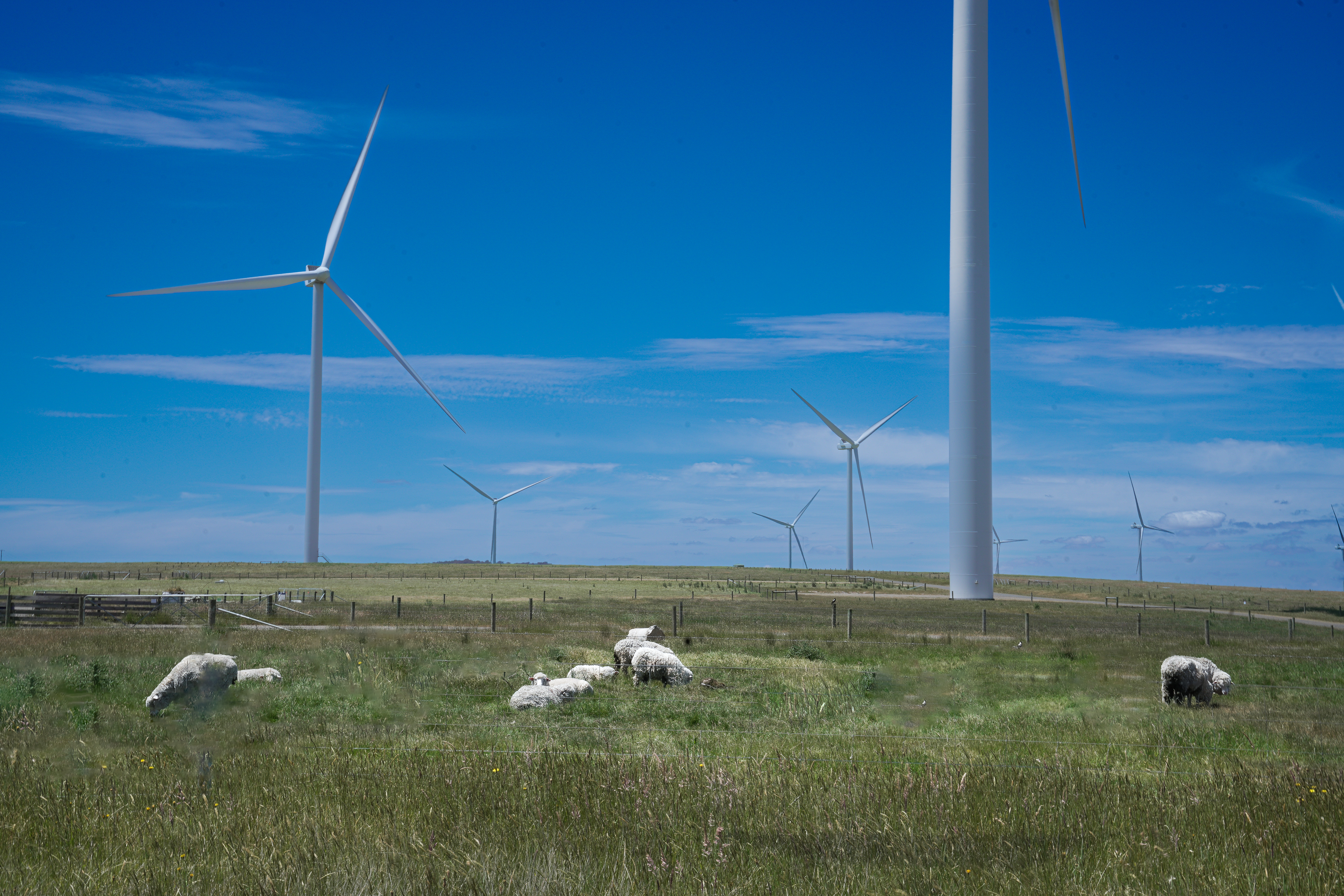
In general, there is a lack of consensus across the literature. However, where research finds that there is an impact on property prices, it tends to be small (somewhere between -0.68% and 11%), confined to a 1–2-kilometre radius of the wind farm. The research also found that the impact reduces over time, with the effect typically peaking within three years of construction, then disappearing within the next seven yearsiiiiiiivv.
Researchers suggest that inconsistent findings across studies are likely due to variables like view, distance from the wind farm, types of properties, number of turbines, and local sentiment towards renewable energy.
For example, a study in the United States found that, although there was an average price rebound after the construction of a nearby wind farm, the rebound varied across the three communities studied. Where local attitudes tended to be anti-wind, prices were less likely to rebound and vice versa in areas with pro-wind sentimentvi.
Although Australian research is limited, the available evidence suggests similar results. A 2016 study commissioned by the NSW Department of Environment and Heritage found that wind farms did not have a significant impact on rural properties used for agricultural purposes. Although the data was limited to make conclusive findings related to price impacts, the report notes that the majority of wind farms in Australia are located in rural areas and found no evidence to support the claim that a nearby wind farm would decrease property valuesvii.
The 2012 Parliamentary Committee on wind farms cited similar findings. Properties used for primary production, which are the most common type near Australian wind farms, were largely unaffectedviii.
Solar farms
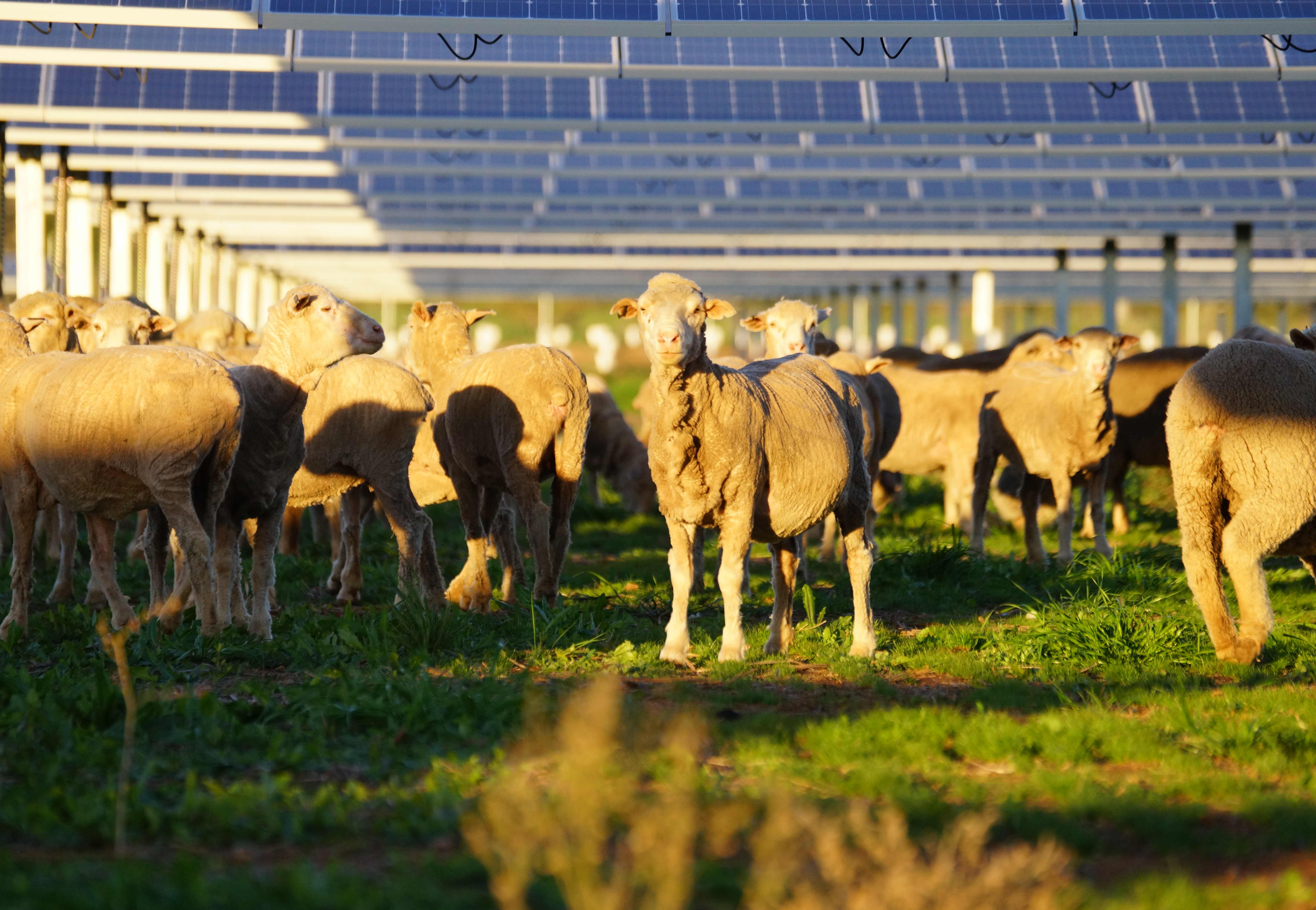
Research on solar farms shows similar findings regarding impact on property prices, although generally with smaller effects. A 2024 study across six US states found residential properties within 0.5 miles of large solar farms dropped in value by between 1.5 and 2.3 per cent. The effect was statistically insignificant for properties in mixed-use, urban or greenfield areas. Another study found that while residential property values within 3 miles decreased by around 4.8%, the effect diminished over distance and time.
The same research found that, generally, agricultural land increased in value by 19 per cent, reflecting new lease income and infrastructure investmentixx.
A separate study of 70 utility-scale solar projects across the US Midwest found nearby residential property values increased by 0.5 to 2 per cent, particularly when solar farms were located on flat, previously agricultural land. It found that other factors, such as the number of bedrooms and overall location, were more important drivers of pricexi.
In Australia, large-scale studies on property price trends near solar farms are limited. However, a 2022 market report by PRD found that property prices in six NSW and Victorian local government areas with major renewable energy projects (either wind or solar) rose by more than 35 per cent over five yearsxii. This highlights the broader impact on regional economies that renewable energy projects can bring through increased jobs, improved infrastructure and community facilities. This in turn impacts land and property prices, with many regional areas experiencing increased demand for local propertyxiii.
Insurance premiums
Some community members have expressed concern that living near wind or solar farms could increase their home insurance premiums. However, the Insurance Council of Australia has stated that insurers do not assess or treat proximity to renewable energy infrastructure as a risk factor.
Premiums are based on factors such as flood and bushfire exposure, building materials, age of the home, crime rates and rebuild costs. These are far more significant than any influence from nearby renewable infrastructure.
Premium increases seen across Australia in recent years are driven by the rising costs of natural disasters, building materials, and inflation, rather than renewable energy developmentxiv. In fact, with climate change fuelling more frequent and severe weather events, expanding renewable energy is one of the most critical strategies for reducing future climate-related risksxv.
Conclusion
The available data does not support the claim that large-scale solar or wind projects reduce property values or increase insurance premiums.
International research suggests:
- Some nearby homes may experience small value reductions, which are typically limited to properties within one kilometre of a new project.
- These impacts often fade within a few years, as people become accustomed to the infrastructure and new infrastructure, job creation, and community benefits emerge in the region.
- Agricultural land values often rise due to leasing opportunities and productivity gains.
- Insurance premiums are based on environmental and structural risks, not on the presence of renewable energy projects.
While community concerns are valid and should be addressed through transparent planning and engagement, the long-term evidence suggests that renewables can coexist with strong regional property markets. In many areas, they may even contribute to their growth.
References
i – Schütt, M. (2023). Wind Turbines and Property Values: A Meta-Regression Analysis. Environmental and Resource Economics. https://doi.org/10.1007/s10640-023-00809-y
ii – W. Guo, L. Wenz, & M. Auffhammer (2024) The visual effect of wind turbines on property values is small and diminishing in space and time, Proc. Natl. Acad. Sci. U.S.A. 121 (13) e2309372121, https://doi.org/10.1073/pnas.2309372121
iii – Brinkley, C., & Leach, A. (2019). Energy next door: a meta-analysis of energy infrastructure impact on housing value. Energy Research & Social Science, 50, 51–65. https://doi.org/10.1016/j.erss.2018.11.014
iv – Vyn, R. J. (2018). Property Value Impacts of Wind Turbines and the Influence of Attitudes toward Wind Energy. Land Economics, 94(4), 496–516. https://doi.org/10.3368/le.94.4.496
v – Dröes, M. I., & Koster, H. R. A. (2021). Wind turbines, solar farms, and house prices. Energy Policy, 155, Article 112327. https://doi.org/10.1016/j.enpol.2021.112327
vi – Dong, L., Gaur, V., & Lang, C. (2023). Property value impacts of onshore wind energy in New England: The importance of spatial heterogeneity and temporal dynamics. Energy Policy, 179, Article 113643. https://doi.org/10.1016/j.enpol.2023.113643
vii – Urbis (2016) Review of the impact of wind farms on property values, commissioned by NSW Office of Environment and Heritage. Available at: https://arkenergy.com.au/documents/444/review_of_the_impact_of_wind_farms_on_property_values_urbis_2016_07_21.pdf
viii – Senate Community Affairs References Committee (2011) The social and economic impact of rural wind farms, Report, Senate Community Affairs References Committee, Parliament of Australia, Canberra, 23 June. Available at:https://www.aph.gov.au/Parliamentary_Business/Committees/Senate/Community_Affairs/Completed_inquiries/2010-13/impactruralwindfarms/report/~/media/wopapub/senate/committee/clac_ctte/completed_inquiries/2010-13/impact_rural_wind_farms/report/report.ashx
ix – Elmallah, S., Hoen, B., Fujita, K., Robson, D., & Brunner, E. (2023). Shedding light on large-scale solar impacts: An analysis of property values and proximity to photovoltaics across six U.S. states. Energy Policy. https://doi.org/10.1016/j.enpol.2023.113425.
x – C. Hu, Z. Chen, P. Liu, W. Zhang, X. He, & D. Bosch (2025) Impact of large-scale solar on property values in the United States: Diverse effects and causal mechanisms, Proc. Natl. Acad. Sci. U.S.A. 122 (24) e2418414122, https://doi.org/10.1073/pnas.2418414122
xi – Hao, S., & Michaud, G. (2024). Assessing Property Value Impacts Near Utility-Scale Solar in the Midwestern United States. Solar Compass. https://doi.org/10.1016/j.solcom.2024.100090.
xii – PRD Real Estate (2022) Renewable Energy and the property market, PRD Research Hub, 13 October. Available at: https://www.prd.com.au/research-hub/article/renewable-energy-property-market-report/
xiii – Smart Property Investment (2022) ‘5 regions to get a boost from renewable energy boom’, Smart Property Investment. Available at:https://www.smartpropertyinvestment.com.au/hotspots/24114-5-regions-to-get-a-boost-from-renewable-energy-boom#:~:text=Dubbo%2C%20NSW,the%20area%20to%20continue%20rising.
xiv – Insurance Council of Australia (2024) Farm Insurance and Energy Infrastructure, ICA Briefing, May. Available at: https://insurancecouncil.com.au/wp-content/uploads/2024/05/Updated-ICA_Briefing_Farm-Insurance-and-Energy-Infrastructure_May-2024.pdf
xv – Australian Institute for Disaster Resilience (no date) Natural hazards and climate change, Knowledge Hub. Available at:https://knowledge.aidr.org.au/resources/natural-hazards-and-climate-change/