Verdict:
No. Recent outages have been a result of the town’s dependence on a single powerline – a vulnerability that exists regardless of the energy generation source. Diesel generators are being installed as a backup source of electricity in the event the single powerline fails. This solution is making the town’s supply of power more resilient to severe weather and other impacts like fallen branches.
Analysis:
Some people have suggested that Crookwell’s recent power outages were caused by wind farms operating locally. The reality is that the region’s blackouts are the result of weather events and physical damage to the single powerline supplying the town.
Background
Crookwell, in NSW’s Upper Lachlan Shire, has experienced multiple power outages in recent years, including nine unplanned outages since February 2023. The town has a number of windfarms operating in the area and this has led to claims that the outages are caused by the reliability of clean energy.
What’s actually happening
According to Essential Energy, the power distribution company responsible for the area, Crookwell’s outages are not related to renewable energy reliability at all. The fundamental issue is the town’s electricity infrastructure design.1
Crookwell is powered by a single 42-kilometre powerline. Also known as a ‘radial line’ it originates from a source like a spoke on a wheel. This means that if this single line fails due to an accident, severe weather, fallen branch or equipment failure, the region can be cut off from its power source.1
The technical reality
Wind turbines, like those around Crookwell, don’t actually supply power directly to the local community. Instead, they supply electricity into the high voltage transmission network, before being converted in a substation to the low voltage electricity that is then distributed to homes and businesses.
The wind farms near Crookwell feed their power into the local 330kv transmission network while the local distribution network supplying Crookwell operates at 66kV and 11kV.
Plugging one directly into the other would actually damage the network.
The solution
Essential Energy has committed to installing an auto-start diesel generator as an emergency backup power supply. This will be used in the case of a fault or an emergency situation. This is a short-term solution while longer-term options, including solar-battery microgrid technology, are evaluated.2
The broader context
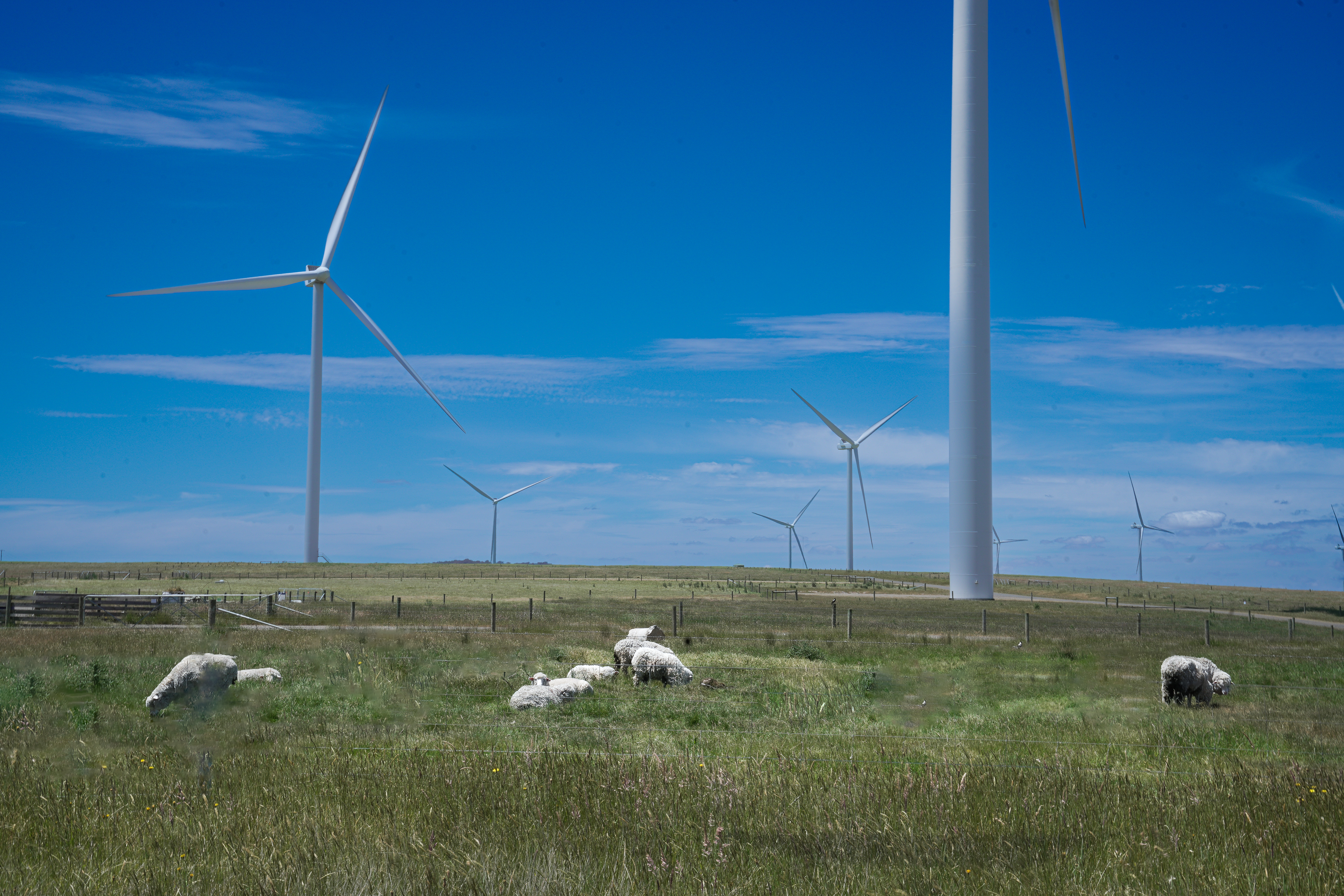
The confusion appears to stem from the visual contradiction of a town surrounded by clean energy infrastructure still needing diesel backup generators. However, this reflects the complexity of electricity grid management rather than any inherent problem with clean energy.
Australia’s electricity grid was largely designed decades ago for centralised coal power generation. In a country as large as ours, careful planning and infrastructure upgrades, particularly in regional areas with limited network access, are required to ensure the lights can stay on in the event of a power outage when towns are cut off from their regular source of electricity supply.3
Conclusion:
While Crookwell’s power outages are real and frustrating for residents, attributing them to clean energy operating in the area is incorrect. Recent outages have been a result of the town’s dependence on a single powerline – a vulnerability that exists regardless of the energy generation source.
The diesel generator solution, while optically contradictory given the surrounding wind infrastructure, represents a pragmatic solution to a local infrastructure problem.
Claims linking these outages to clean energy are misleading and misrepresent the actual technical challenges facing regional electricity supply.
Heard something else in the news that doesn’t sound quite right? Use our contact form and the Fact Check team can look into it.
References:
2 – Hunter Gazette, August 2025