Verdict
Batteries are one of a suite of storage solutions that ‘firm up’ or ‘back up’ renewable energy in a modernised electricity system.
Analysis
The global scale-up in battery manufacturing capability, primarily for the electric vehicle market, has delivered rapid reductions in battery cell costs and technology improvements that have extended the operational lives of battery storage systems1.
To date, Australia has 2.2 GW of fully operational large-scale batteries and 7.9 GW under construction2. Both the energy duration – the time a battery can provide energy for (MWh), and power capacity – the size of the battery (MW) – have been increasing over recent years. Large-scale battery systems committed to investment have roughly doubled in average size from just over 100 MW in 2020-2021, to just over 200 MW in 2023-2024. Meanwhile, the average duration of large-scale battery systems committed to investment in Australia has increased from approximately 1.5 hours in 2020-2021 to 2.5 hours in 2023-20243. Durations are expected to extend further as battery costs continue to fall and the electricity market experiences extended periods of very low-cost solar during the day, making it commercially attractive to invest in time-shifting the power to peak demand periods, such as in the evening.
It is now also common practice for battery storage systems to be installed as part of large-scale solar farms, enabling these solar plants to extend the time range of their output, while also reducing the amount of energy ‘spilled’ during daylight hours, when output can be higher than demand. This helps to ensure demand can be met while also smoothing out energy wholesale market price spikes4.
However, batteries are just one of the energy storage and dispatchable power technologies that are expected to provide the firmed power that Australia needs. The Australian Energy Market Operator’s Integrated System Plan indicates that large-scale batteries will represent just 7 per cent of total installed capacity in the National Electricity Market in 2030, with a range of other energy storage and ‘on-demand’ technologies operating to provide reliable power 24/7. These include pumped hydro, home batteries and gas fired power generation5.
Pumped hydro energy systems are a form of ‘long-duration’ energy storage, which can provide clean power on demand over many hours, days or even a week6. Pumped hydro systems have been in operation in Australia since the 1970s at the Tumut power station in the Snowy region and the Shoalhaven scheme in New South Wales. There are several examples of new pumped hydro ‘batteries’ being developed in Australia, including the Snowy 2.0 project in New South Wales, Cethana in Tasmania and smaller assets like at the former Kidston gold mine in Far North Queensland.
Many other forms of long duration energy storage are also in development, including technologies such as compressed air, flow batteries and thermal energy storage. While these energy storage solutions are not yet being used at scale, their role in balancing the power system and making it more efficient will increase7.
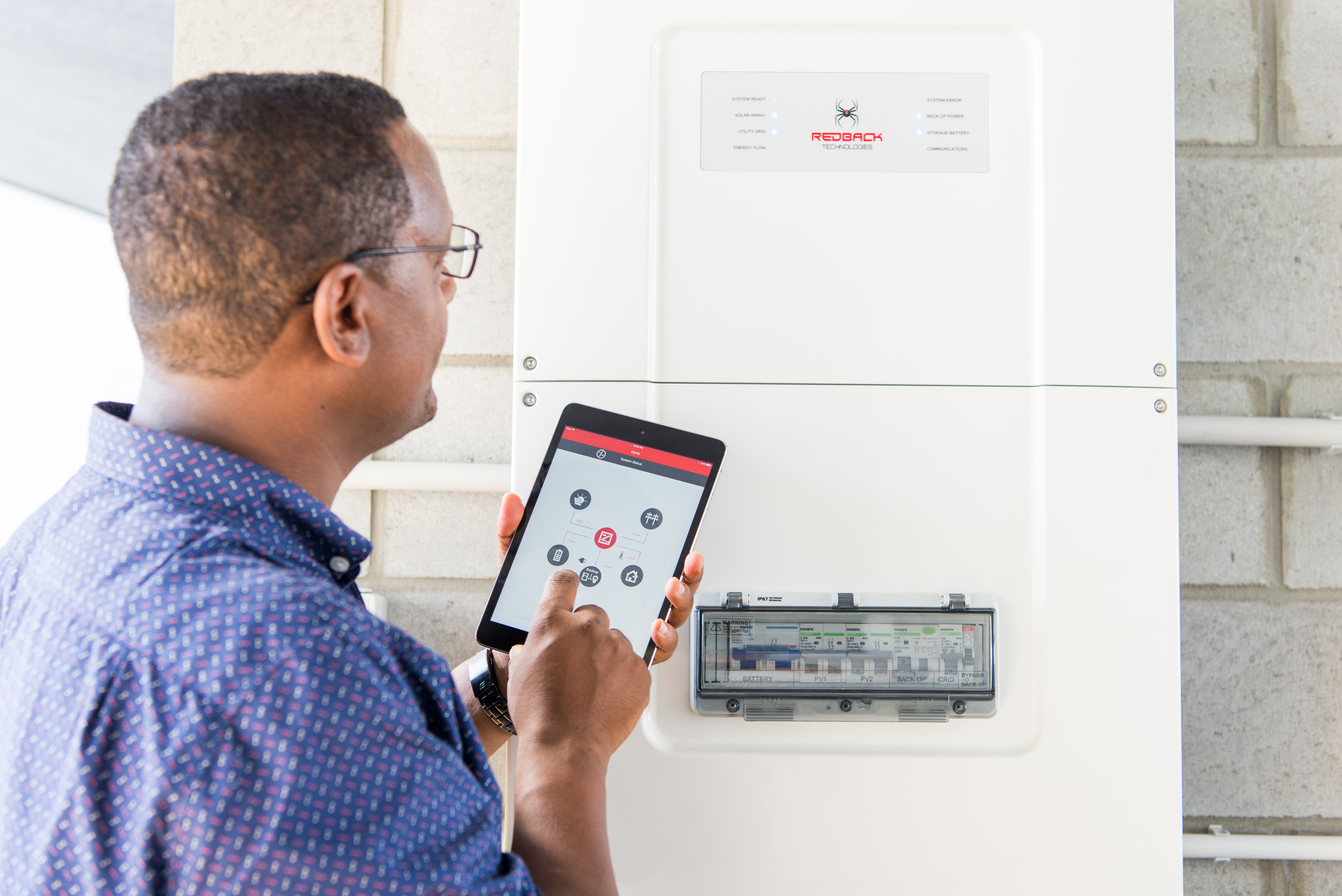
Batteries in homes and businesses are also playing a key role in keeping the lights on. While uptake remains relatively low compared to solar PV installation, the number of Australian households installing a home battery system has been gradually increasing, bringing with it the ability for solar households to get more value from their solar systems, and to ‘power on’ in the case of unexpected power outages8. The Australian Energy Market Operator’s 2024 ISP step change scenario forecasts that behind the meter storage (i.e. residential and commercial sites) will increase from 1 GW to 7 GW by 2030 and further increase to 34 GW of flexible energy from consumer owned storage assets by 2050.9
Finally, electricity from gas-powered generation is expected to continue to play a diminishing but important role in providing back-up electricity supply in times of peak demand. After coal-fired generators retire, gas will be needed to support energy supply during periods of renewable drought and of extreme peak demand.10 There is also potential for renewable gases to substitute fossil-based gas as costs fall in years ahead.
Overall, a broad suite of energy storage solutions – including large and small-scale batteries, pumped hydro and emerging long-duration energy storage technologies – backed up by gas fired power generation, will all play important roles in providing reliable power 24/7 in our modernised energy system.
References
1 – Suyambu M.R. and Vishwakarma P.K. (2024). Improving grid reliability with grid-scale battery energy storage systems (BESS), International Journal of Science and Research Archive, Vol 13(01), pages 776-789. URL: https://ijsra.net/sites/default/files/IJSRA-2024-1694.pdf
2 – Clean Energy Council. (2024). Renewable projects quarterly report Q4 2024. URL: https://cleanenergycouncil.org.au/getmedia/baf51990-48e7-4d0c-b88d-8920eb78d55f/cec-quarterly-report_q4-2024.pdf
3 – Clean Energy Council market analysis, 2020-2024 (unpublished).
4 – Hitachi. (2024). White paper Accelerating utility-scale solar through hybrid systems. URL: https://www.hitachienergy.com/markets/renewable-energy/solar-power
5 – Australian Energy Market Operator. (2024). 2024 Integrated System Plan. URL: https://aemo.com.au/-/media/files/major-publications/isp/2024/2024-integrated-system-plan-isp.pdf?la=en
6 – Blankers, A. et.al. (2021). A review of pumped hydro energy storage. Progress in Energy, Volume 3. URL: https://iopscience.iop.org/article/10.1088/2516-1083/abeb5b
7 – Long Duration Energy Storage Council. (2021). Net-zero power. URL: https://www.ldescouncil.com/assets/pdf/LDES-brochure-F3-HighRes.pdf
8 – SunWiz. (2024). 2023’s record-breaking battery market in charts. URL: https://www.sunwiz.com.au/2023s-record-breaking-battery-market-in-charts/
9 – AEMO (2024). 2024 Integrated System Plan. A roadmap for the energy transition. URL: 2024-integrated-system-plan-isp.pdf
10 – AEMO (2024). 2024 Integrated System Plan. A roadmap for the energy transition. URL: 2024-integrated-system-plan-isp.pdf