Verdict:
Yes! Clean energy delivers clear benefits for Australia’s economy, energy security, environment, and global competitiveness.
Analysis:
In recent debates about Australia’s energy future, many claims have been made about clean energy and its impact on our country. Across multiple areas – from economics and energy security to environmental impact and regional development – these claims often misrepresent the evidence about clean energy’s benefits for Australia.
Economic benefits
Claim: Clean energy makes electricity more expensive for Australian families and businesses.
Fact: Clean energy is now the cheapest form of electricity generation available to Australia and puts downward pressure on energy costs.
The CSIRO’s GenCost report, which is an annual electricity generation cost projection report, consistently shows that clean energy combined with storage and transmission provides lower costs than coal, gas, or nuclear power. The main driver of higher electricity prices in recent years has been volatile gas and coal prices, not clean energy.1
International evidence strongly supports this. Studies across 24 European countries found that wholesale electricity prices decreased in nations with higher clean energy penetration. In Germany, wind and solar power reduced electricity market prices by an average of €9.64/MWh from 2010 to 2017.2
In Australia’s National Electricity Market, as renewable penetration has increased, we’ve seen more frequent periods of extremely low prices and fewer instances of price spikes. This is because of something called the “merit order effect”, which occurs because renewables have near-zero operating costs, and are therefore given priority for dispatch in the National Electricity Market, displacing more expensive fossil fuel generation.2
Energy reliability
Claim: You can’t rely on renewables because “the wind doesn’t always blow and the sun doesn’t always shine.”
Fact: Modern power systems with batteries, other storage and grid integration provide improved reliability over traditional power systems.3
Just as we store water in reservoirs for when we need it, clean energy can be stored using technologies like batteries, pumped hydro, compressed air, and thermal storage. Battery costs have fallen dramatically, making storage not only viable but the most competitive option for storing electricity.4
Research by the Australian National University found that an optimal mix of wind, solar, pumped hydro, and biogas, with strong regional interconnection, can provide electricity supply with the same reliability as our current system. The key is geographic diversity – when the wind isn’t blowing in one region, it may be blowing in another, or the sun may be shining.5
You can read more about the reliability of clean energy in our previous fact checks:


Regional economic growth
Claim: Large-scale renewable projects hurt regional communities and property values.
Fact: Clean energy projects bring significant economic benefits to regional Australia, including job creation and increased property values.
A 2022 market analysis found that property prices in six NSW and Victorian areas with major renewable energy projects rose by more than 35% over five years. This reflects the broader economic impact these projects have through increased employment, improved infrastructure, and enhanced community facilities.6
Clean energy projects provide ongoing income to farmers through land lease payments, often providing more stable returns than agriculture alone. This additional income helps farming families weather droughts and market volatility while maintaining agricultural production on most of their land.
You can read more about the impacts and benefits of clean energy on regional communities in our previous fact check:

Clean energy complements agriculture
Claim: Clean energy projects consume vast amounts of prime agricultural land and threaten our food security.
Fact: Renewable energy uses a very small share of Australian land and will have a negligible impact on Australia’s food security.
Australian agriculture currently accounts for 55 per cent of Australian land use.7 The Australian Energy Market Operator has estimated up to 50 GW of ‘variable renewable energy’ (wind and solar power) capacity will need to be installed between 2020 and 2040 to replace Australia’s retiring coal-fired power stations.
In the unlikely event that all of this new variable renewable energy were to be in the form of large-scale solar, then the total land required to support this solar generation would be up to 120,000 hectares. That’s the equivalent of less than 0.016 percent of Australia’s total land currently used for agricultural production.8 Wind farms in Australia range in size from a handful of turbines through to over a hundred turbines. While larger wind farms are spread out over large areas (more than 100 km2), the turbines themselves, along with access roads and other infrastructure, only occupy around 1% of that land.9
A 2022 study by the NSW Agriculture Commissioner’ found that renewable energy development “is not in conflict with agricultural land use at a sufficiently large scale to materially affect the New South Wales state agricultural base.” The study found that clean energy infrastructure would likely use just 0.1% of rural land across NSW.10
Importantly, clean energy offers farmers a guaranteed income that isn’t connected to fluctuating commodity prices or impacted by extreme weather.
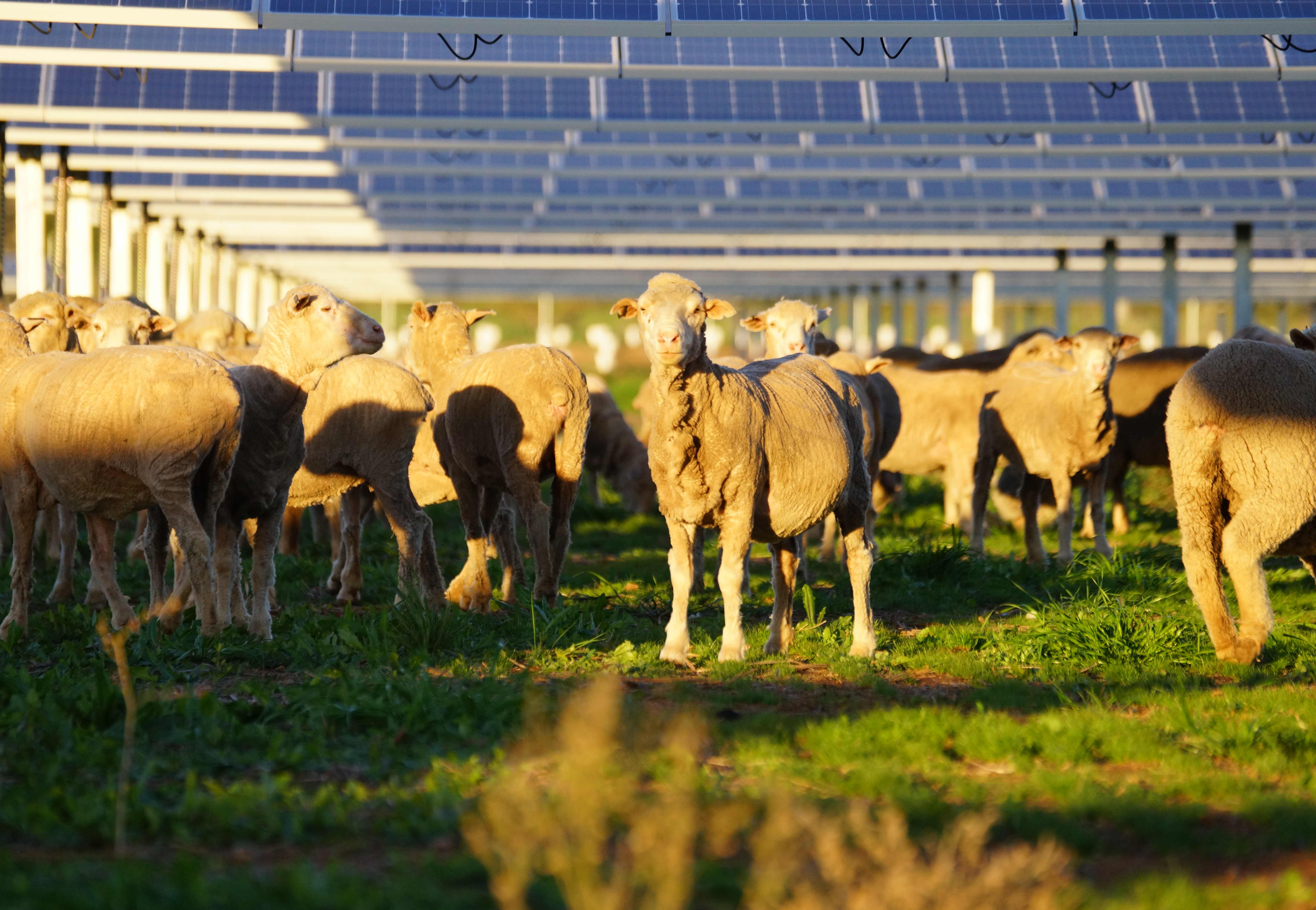
Farmers hosting wind turbines or solar farms on their properties are paid to host them providing a new income source on their property. They are typically offered more than $40,000 rent per turbine per year and up to $1500 per hectare per year for solar panels. In addition, studies confirm sheep that graze under the panels are showing improved wool yields.11
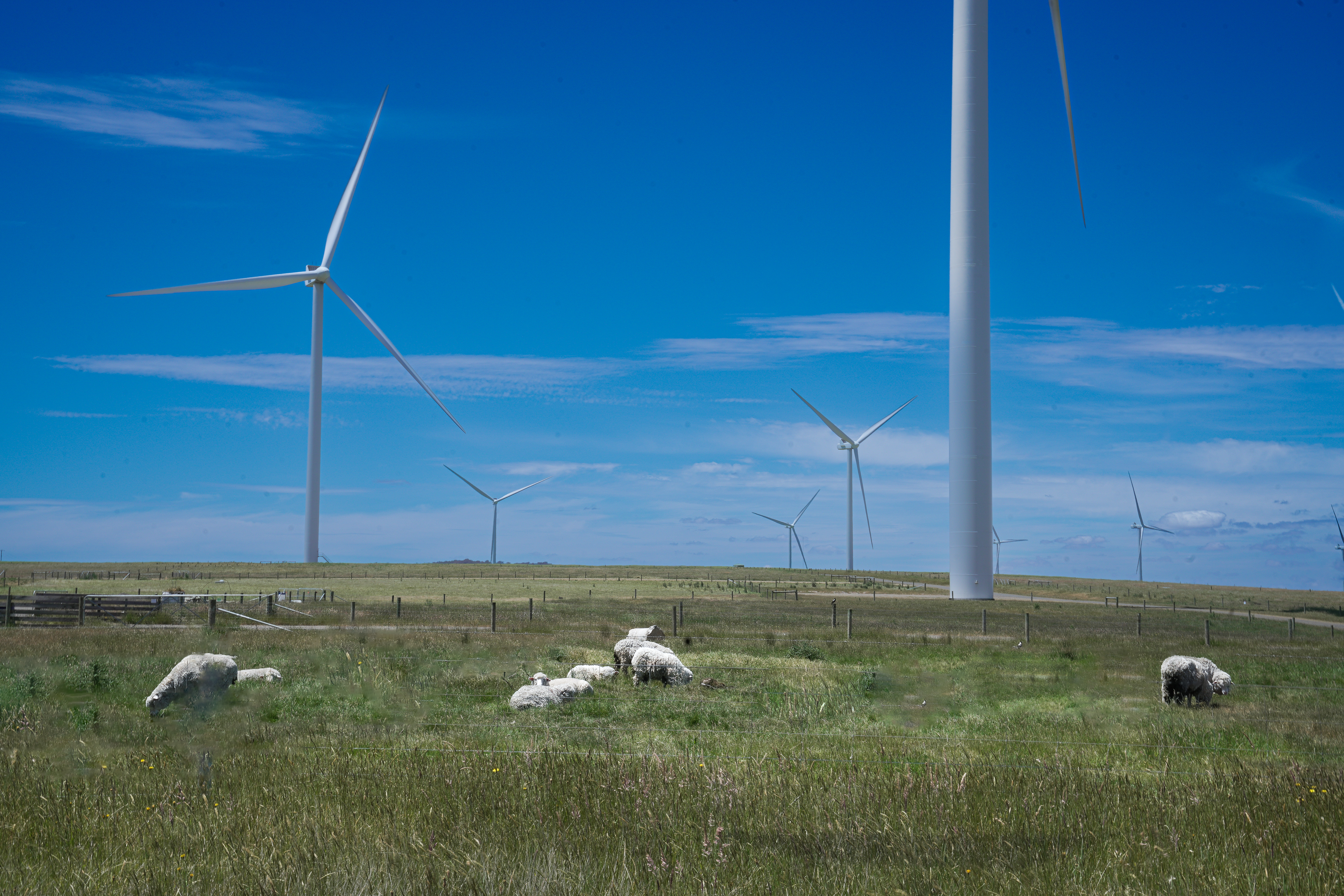
Further, for farmers hosting wind turbines there are added productivity benefits, for example, herding sheep and cattle across paddocks becomes much easier as they’re freely able use access roads on their properties.
You can read more about clean energy and agriculture in our previous fact check:

Environmental safety
Claim: Solar panels and wind turbines are toxic and dangerous to human health and the environment.
Fact: The evidence shows that clean energy infrastructure poses minimal health and environmental risks.
Extensive testing by the US Environmental Protection Agency found that solar panels do not leach hazardous levels of toxins, even under extreme conditions like being destroyed or submerged in acid.12 The International Energy Agency confirmed that any heavy metal leaching from solar panels remains well below safety screening levels.13
Wind turbines, made primarily of steel and fibreglass, contain lubricating fluids that are well-contained during normal operation. Any risks are effectively managed through standard maintenance practices.14
You can read more about potential environmental impacts of clean energy in our previous fact checks:

Transmission line requirements
Claim: Clean energy requires 28,000km of new transmission lines, an impossibly expensive undertaking.
Fact: Australia will require 4,500km of new transmission lines to achieve it’s 82% clean energy target by 2030. Australia already has over 40,000km of transmission lines and over 850,000km of electricity distribution lines, 200,000km of which are already located in regional areas.
According to the Australian Energy Market Operator, the most likely scenario for achieving the federal government’s 2030 target of 82% renewable energy requires 4,581 kilometres of new transmission lines by 2030. This represents a measured expansion to connect Renewable Energy Zones to population centres while maintaining grid stability.15 AEMO estimates that close to 10,000 km of additional transmission will be required by 2050. That includes the 4,581 km needed this decade.
You can read more about estimated transmission line requirements in our previous fact check:

Subject to strict regulations
Claim: Clean energy projects receive preferential government treatment and excessive subsidies.
Fact: Clean projects face stringent approval processes and do not receive a disproportionate amount of subsidies when compared with fossil fuel industries.
Renewable energy projects must meet the same standards as comparable developments and often face complex and lengthy approval processes. They receive no preferential treatment in government assessments.16
While it is difficult to directly compare the amount of subsidies that clean energy project receive compared to fossil fuels, one recent estimate was that $29 billion from 2014-2023 was directed to the renewable energy industry.17 In the 2024-25 federal budget, the government allocated about $22 billion to support renewable energy initiatives through the ‘Future Made in Australia’ package.18
In comparison, in 2023-24, subsidies for coal and gas industries totalled $14.5 billion – a 30% increase from the previous year.19
You can read more about clean energy and government subsidies in our previous fact check:

Strategic value: Hydrogen and energy exports
Claim: Green hydrogen is a waste of money that diverts resources from more practical solutions.
Fact: Green hydrogen represents a major economic opportunity for Australia and is essential for decarbonising hard-to-electrify industries.
Green hydrogen enables decarbonisation of industries like steel production, heavy transport, shipping, and aviation that cannot easily be electrified. For Australia, it represents an enormous export opportunity, potentially replacing some fossil fuel exports with clean energy exports.
The 2024 National Hydrogen Strategy positions Australia to become a global hydrogen leader, leveraging our abundant clean energy resources to create new industries and regional jobs while supporting both domestic decarbonisation and international climate goals.20, 21
Read more about green hydrogen on our Can Australia be a clean energy superpower fact check:

A diverse ownership mix
Claim: Clean energy projects are predominantly foreign owned, sending profits overseas.
Fact: While foreign investment is significant, it brings capital and expertise to Australia, and foreign ownership is actually higher in other industries.
The renewable energy sector in Australia includes a mix of foreign investors, Australian companies, public utilities, and community-owned projects, providing a diverse ownership structure.22, 23
Foreign investment in renewables reflects global capital markets and brings benefits through increased investment, job creation, and technology transfer.24 When compared to other industries, foreign ownership is often higher – for example mining ranks at the top industry attracting foreign investment in Australia, followed by financial and insurance activities and real estate.25
Minimal negative wildlife impacts
Claim: Clean energy infrastructure disproportionately affects wildlife populations.
Fact: While clean energy infrastructure has some wildlife impact, it’s minimal compared to other human activities and fossil fuel alternatives.
Environmental impact assessments are mandatory as part of the planning process for renewable energy projects and require that project proponents consider proximity to protected areas and outline mitigation actionsi. These regulations are aimed at ensuring that any proposed project is developed in a way that minimises habitat disruption. This includes rigorous site selection, environmental assessments, and ongoing monitoring and mitigation measures. The federal government has been working with the state and territory governments on an improved approach to environmental oversight of renewable energy projects under the Environment Protection and Biodiversity Conservation (EPBC) Act.
Concerns about wildlife, particularly koalas, birds and bats, are frequently raised. Claims are often made without context.
For example, it’s true that some koala habitat has been cleared for clean energy projects, however this is significantly less than land cleared for mining, property development or unapproved agricultural activities.
The impact on birds offers a similar story – we know that some birds unfortunately die when they collide with wind turbines, however, when put into context of bird deaths because of feral cats, foxes, cars, powerlines and high-rise buildings, this is a tiny fraction of total bird deaths.
While it is important to put wildlife impacts into context, ideally harm is minimised as much as possible. Research into how species interact with clean energy infrastructure is still developing. Post-construction monitoring is required by clean energy operators as part of getting government approval, and this means data is being gathered better understand impacts and mitigations.26-29
Conclusion: Clean energy has a net benefit for Australia
The evidence overwhelmingly demonstrates that renewable energy is good for Australia across multiple dimensions:
Economically: clean energy provides the cheapest electricity generation available, drive down energy costs through the merit order effect, and create jobs and investment in regional communities.
Environmentally: clean energy offers a clean alternative to fossil fuels with minimal health and safety risks, manageable wildlife impacts, and clear net environmental benefits when lifecycle impacts are considered.
Strategically: clean energy positions Australia as a future clean energy exporter, reduce our dependence on volatile fossil fuel markets, and provide energy security through diverse, domestic resources.
Socially: clean energy projects support rural communities through lease payments and economic activity while coexisting with agricultural land use.
The transition requires careful planning, appropriate investment in transmission infrastructure, and sensible policy frameworks. Clean energy represents Australia’s best path toward a cleaner, cheaper, more secure energy future that creates jobs, drives innovation, and positions our country as a leader in the global clean energy economy. The question isn’t whether Australia should embrace clean energy, but how quickly we can realise their full benefits for our nation’s prosperity and future.
Heard something else in the news that doesn’t sound quite right? Use our contact form and the Fact Check team can look into it.
References:
1- https://www.csiro.au/en/research/technology-space/energy/electricity-transition/gencost
2 – Guanghao Wang, Erwann Sbai, Le Wen, Mingyue Selena Sheng, The impact of renewable energy on extreme volatility in wholesale electricity prices: Evidence from organisation for economic co-operation and development countries, Journal of Cleaner Production, Volume 484, 2024, 144343, ISSN 0959-6526, https://doi.org/10.1016/j.jclepro.2024.144343.
3 – Morrison, R., 2025. Case studies in resilience: How renewables helped. Renewable Energy Magazine. Available at: https://www.renewableenergymagazine.com/rose-morrison/case-studies-in-resilience-how-renewables-helped-20250109
4 – Hassan, Alguburi, Sameen, Salman & Jaszczur, 2023. A review of hybrid renewable energy systems: Solar and wind-powered solutions: Challenges, Opportunities and policy implications. Results in Engineering. Vol 20. Available at: https://doi.org/10.1016/j.rineng.2023.101621
5 – Andrew Blakers, Bin Lu and Matthew Stocks. (2017). 100% renewable electricity in Australia, Energy, Vol 133, pages 471-482. URL: 100% renewable electricity in Australia – ScienceDirect
6 – PRD Real Estate (2022) Renewable Energy and the property market, PRD Research Hub, 13 October. Available at: https://www.prd.com.au/research-hub/article/renewable-energy-property-market-report/
7 – Snapshot of Australian Agriculture 2025 – DAFF, https://www.agriculture.gov.au/abares/products/insights/snapshot-of-australian-agriculture
8 – Solar synergies – renewable energy and agriculture thrive together
9 – Andrew Blakers. (2024). Australian National University. URL: Detailed_landuse_calculation.pdf
10 – NSW Agriculture Commissioner. (2022). Renewable energy generation and agriculture in NSW’s rural landscape and economy – growth sector on a complementary path. URL: Renewable energy generation and agriculture in NSW’s rural landscape and economy – growth sectors on a complementary path
11 – How Renewable Energy And Agriculture Thrive Together: Fact Sheet | Clean Energy Council
12 – United States Environmental Protection Agency (EPA), 2023. Solar panel frequent questions. Available at: https://www.epa.gov/hw/solar-panel-frequent-questions?
13 – International Energy Agency. Human Health Risk Assessment Methods for PV Part 3: Module Disposal Risks. URL: Human Health Risk Assessment Methods for PV Part 3: Module Disposal Risks – IEA-PVPS
14 – Science Feedback, 2021. The energy costs of manufacturing wind turbines are recouped in one to six months; turbines are financially profitable over their lifetimes. Available at: https://science.feedback.org/review/wind-turbines-become-profitable-in-one-to-six-months-most-u-s-wind-turbines-are-made-in-the-u-s-denmark-and-spain/
15 – Australian Energy Market Operator (2024) Integrated System Plan 2024. URL: https://aemo.com.au/-/media/files/major-publications/isp/2024/2024-integrated-system-plan-isp.pdf?la=en
16 – Herbert Smith Freehills, 2024. Delivering major clean energy projects – Review of the EPBC Act for renewable energy projects in Queensland, New South Wales. Available at:https://www.herbertsmithfreehills.com/dam/jcr:f2e319c2-8f27-4acc-9513-3e5c6d1645b9/Delivering%20Major%20Clean%20Energy%20Projects%20%E2%80%93%20Review%20of%20the%20EPBC%20Act%20for%20Renewable%20Energy%20Projects%20in%20Queensland,%20New%20South%20Wales%
17 – Centre for Independent Studies (2023) Counting the cost: Subsidies for renewable energy. Available at: https://www.cis.org.au/publication/counting-the-cost-subsidies-for-renewable-energy/
18 – Baker McKenzie (2024) Australia Federal Budget 2024–25: Key takeaways for the energy transition. Available at: https://insightplus.bakermckenzie.com/bm/energy-mining-infrastructure_1/australia-federal-budget-2024-25-key-takeaways-for-the-energy-transition
19 – The Australia Institute (2024) Fossil fuel subsidies in Australia 2024. Available at: https://australiainstitute.org.au/report/fossil-fuel-subsidies-in-australia-2024/
20 – Department of Climate Change, Energy, Environment and Water. (2024) National Hydrogen Strategy. URL: https://www.dcceew.gov.au/energy/publications/australias-national-hydrogen-strategy
21 – Australian Renewable Energy Agency. (2025) Hydrogen energy URL: https://arena.gov.au/renewable-energy/hydrogen
22 – https://www.abc.net.au/news/2025-05-27/community-owned-denmark-wind-farm-to-double-output/105318020
23 – https://www.canstarblue.com.au/electricity/wind-farms-australia/
24 – https://www.dfat.gov.au/trade/investment/the-benefits-of-foreign-investment
26 – MIT Climate Portal (n.d.) Do wind turbines kill birds?. Available at: https://climate.mit.edu/ask-mit/do-wind-turbines-kill-birds
27 – The Conversation (2024) Bats are avoiding solar farms and scientists aren’t sure why. Available at: https://theconversation.com/bats-are-avoiding-solar-farms-and-scientists-arent-sure-why-211074
28 – The Guardian (2024) Turbine bat deaths could fall without loss of power if wind-speed triggers were raised, Victorian research finds. Available at: https://www.theguardian.com/environment/2024/dec/13/turbine-bat-deaths-could-fall-without-loss-of-power-if-wind-speed-triggers-were-raised-victorian-research-finds
29 – Clean Energy Regulator (n.d.) Innovative technology saves endangered eagles. Available at: https://cer.gov.au/news-and-media/case-studies/innovative-technology-saves-endangered-eagles